
Built-In Testing for Stability, Safety, and Real-World Performance
Testing is not an extra step - it’s part of a structured manufacturing process. At Vaulabs, we integrate stability, compatibility, and safety testing to ensure your product performs consistently, remains compliant, and is ready for retail and real-world conditions. From accelerated stability studies to packaging compatibility and dermatologist-tested safety validation, every stage is designed to reduce risk before production - not after.
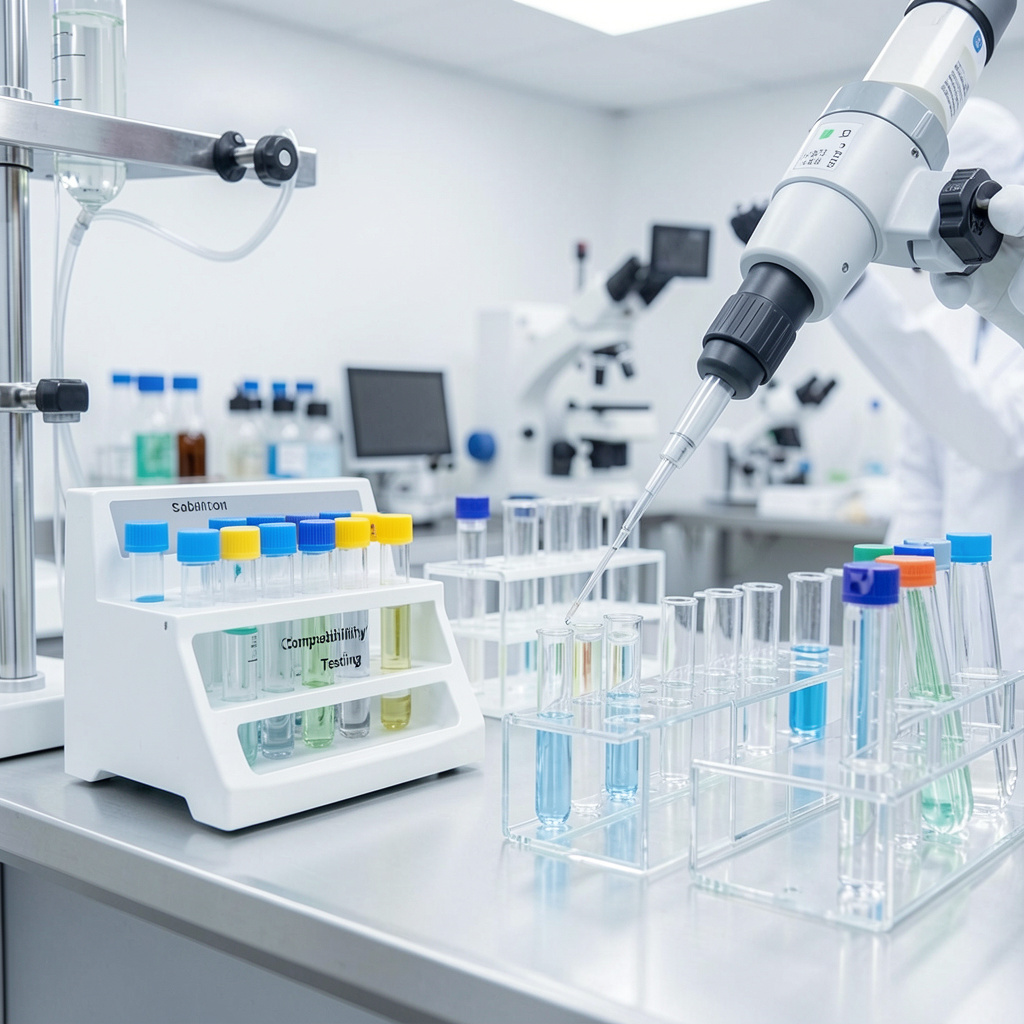
What We Offer:
-
Includes TAMC, TYMC, and pathogen screening to confirm microbiological safety before production.
-
Confirms that your preservative system effectively prevents microbial growth under various stress conditions.
-
Simulates 12 months of shelf life using heat, light, and freeze–thaw cycles. Also checks how your formula interacts with packaging materials.
-
Measures pH, viscosity, texture, and appearance — ensuring consistency across batches and supporting your marketing claims.
How It Works
-
1
Microbial Testing
We perform TAMC, TYMC, and pathogen screening to ensure your product meets microbiological safety standards before production.
-
2
Preservative Efficacy Testing (PET)
We evaluate how your preservative system performs over time and under stress — ensuring long-term product protection.
-
3
Stability & Freeze–Thaw Testing
Simulates shelf life, temperature variation, and transit stress to detect issues like separation, odor, or discoloration.
-
4
Packaging Compatibility
We test how your formula interacts with packaging materials (e.g. tubes, jars, droppers) to avoid leaching, corrosion, or texture changes.
-
5
pH, Viscosity & Sensory Checks
We measure pH, texture, viscosity, and visual appearance to ensure batch-to-batch consistency and support marketing claims.
Get Your Free Quote

FAQs
-
Basic microbial and pH/viscosity checks can be completed in a few days. Stability and preservative efficacy testing may take 4–12 weeks depending on the protocol. We’ll build a timeline that aligns with your launch goals.
-
Yes. Amazon, the EU, and most retailers require documented safety, stability, and efficacy data. We help you meet those standards without delays or guesswork.
-
We don’t recommend it. Natural and clean beauty products are often more sensitive to light, heat, and oxidation. Stability testing helps prevent costly surprises after launch.
-
We offer flexible options depending on what you need — from individual checks to full compliance packages. You’ll receive transparent pricing during your product development phase.
Why Vaulabs
Expertise You Can Trust
Our experienced team brings over a decade of skincare manufacturing know-how to every project.
Clean, Transparent Formulations
We prioritize clean ingredients and full transparency, supporting your brand’s commitment to health and sustainability.
U.S.-Based Production
All manufacturing is done in FDA-registered, NSF-certified facilities right here in the USA.
End-to-End Support
From formulation to packaging, testing, and shipping — we manage the entire process in-house, so you don’t have to worry.
Frequently asked questions
What testing does Vaulabs run in house?
In-house testing covers microbial screening with TAMC, TYMC and pathogen tests, preservative efficacy testing, stability and compatibility studies, and physical checks for pH, viscosity, texture and appearance. Testing runs inside the manufacturing process, so problems surface before production rather than after a batch is filled.
How long does testing usually take?
Basic microbial and pH or viscosity checks can be completed in a few days. Stability and preservative efficacy testing may take 4 to 12 weeks depending on the protocol. We build the testing schedule around your launch date, and testing runs in parallel with packaging decisions.
What is stability testing and what does it prove?
Stability testing simulates 12 months of shelf life using heat, light and freeze-thaw cycles. It detects separation, odor change, discoloration and other failures that appear over time or in transit. That study is what lets you state a shelf life and defend it to a retailer.
What is preservative efficacy testing?
Preservative efficacy testing, or PET, confirms that your preservative system prevents microbial growth under stress conditions and over time. It is a core safety document for clean beauty formulas, where preservative systems are often lighter, and retailers and marketplaces frequently request it during onboarding.
Is testing required for Amazon or EU compliance?
Yes. Amazon, the European Union and most retailers require documented safety, stability and efficacy data before they will list a cosmetic product. We produce that documentation during development, so onboarding does not stall while a study is run after the fact.
Can I skip stability testing if my product is natural?
We do not recommend it. Natural and clean beauty products are often more sensitive to light, heat and oxidation than conventional ones, so they fail in more ways. Stability testing costs far less than a separated or recalled batch discovered by customers after launch.
Do you test how the formula behaves in its packaging?
Yes. Packaging compatibility testing checks how your formula interacts with tubes, jars, droppers and other components, catching leaching, corrosion, discoloration or texture change. It runs alongside stability testing, so the packaging decision is validated before you commit to a large component order.
How much does testing cost?
Testing is quoted per protocol rather than as one fixed fee, from individual checks to a full compliance package. You receive transparent pricing during the product development phase, once the formula, packaging and target markets are defined, since those determine which studies are actually required. ### JSON-LD