
Your Clients Have Already Told You What to Make
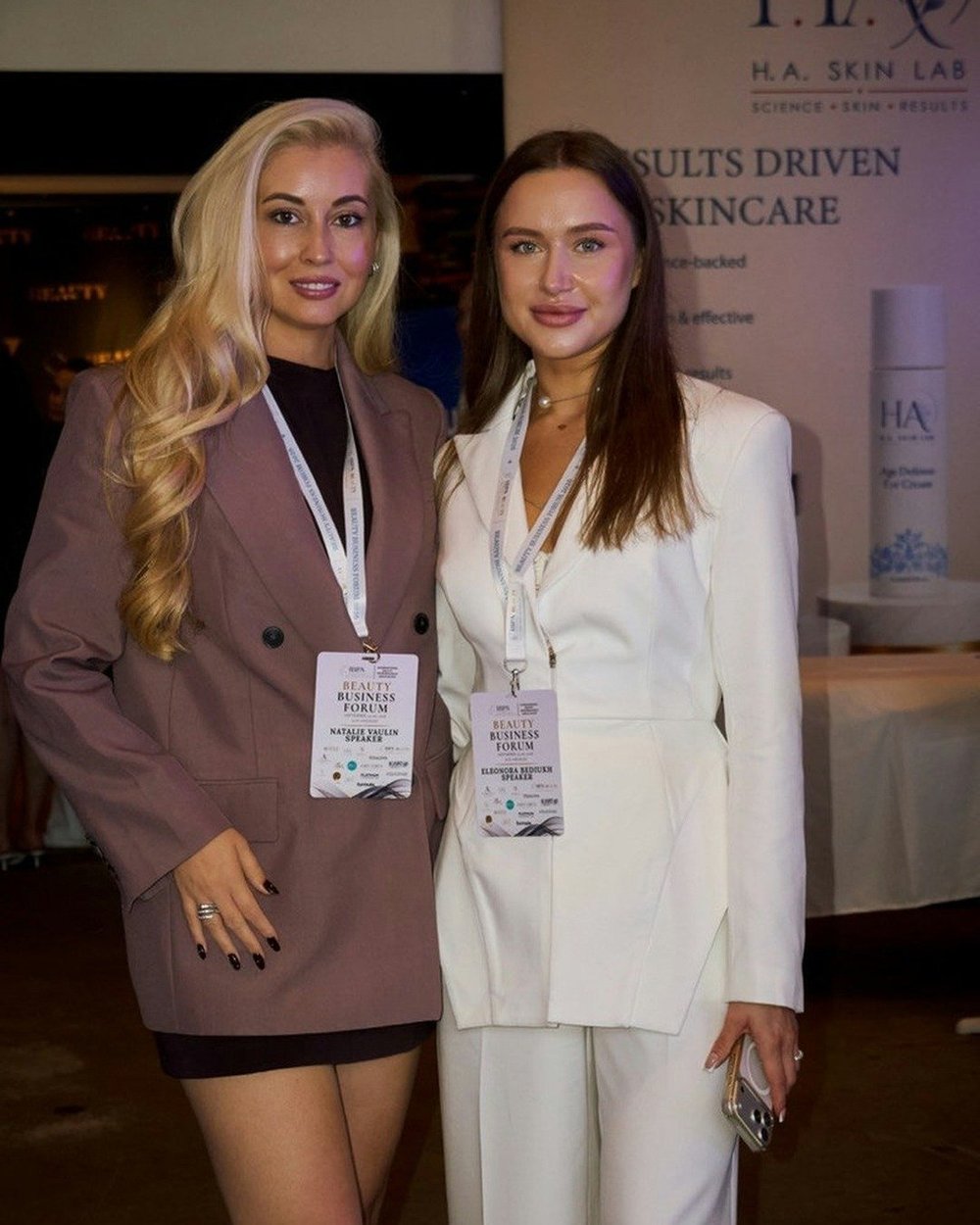
Notes from the Beauty Business Forum stage, Los Angeles, September 2026.
There is a version of the "start your own beauty brand" conversation that begins with market research, competitor grids and trend reports. It is not wrong. It is just rarely where a good first product comes from.
Standing on that stage in front of a room of salon owners, med spa owners, brow and lash professionals and first-time founders, the thing worth saying was almost the opposite: most of you already did the research. You just did not file it as research.
The hundred-times rule
You hear it every week, in the chair, with your hands in someone's hair or on their skin.
My scalp is dry no matter what I use. Nothing holds after this treatment. I love the result but I cannot live with the texture. It stings on day two. It pills under makeup.
Twenty times, that is a client complaint. A hundred times, that is a product brief written by the market and handed to you for free.
A professional with a hundred regular clients frequently reads a category better than someone with an excellent business education who has never worked with an end user directly. That knowledge gets discounted constantly, usually by the person who has it.
What a manufacturer actually needs from you
Nobody expects a founder to write a formula. That is the lab's job.
What a founder brings is the brief: who this is for, what problem it solves, how it should feel on the skin, what it has to cost on the shelf. Four answers. From there the sequence is ordinary — development, first sample, revisions, testing and packaging, production — and none of it requires a chemistry degree or a facility of your own.
The gap between "I have an idea" and "I have a product" is not expertise. It is a brief specific enough to build against.
Start with one
The most common version of a first line we see is six products at once: a cleanser, a serum, a cream, a mask, a toner, an eye cream.
The question that usually produces silence is this one. Which of those six is the reason someone remembers your brand?
Olaplex launched with one product that solved one problem. Glossier launched with four, after years of building an audience that already trusted the voice behind them. Two completely different stories, one conclusion: focus first, trust second, range third.
One strong product, for a clearly defined person, solving a clearly defined problem. If the market loves it, you will have time for the rest.
The part that is not about business
The second thing worth leaving that room with had nothing to do with launching anything.
Every person sitting there is already part of this industry, whether or not they ever put their name on a jar. What you work with, what you put on your shelf, what you recommend to a client is a vote, cast daily, for what this industry treats as normal.
One company cannot change an industry. One founder certainly cannot. Thousands of people making slightly different decisions can change what counts as the standard.
That is the whole reason Vaulabs exists, and it is why clean has to stop being an expensive special category and start being the baseline.
Vaulabs is a clean beauty contract manufacturer and R&D lab in Clearwater, Florida. If your clients keep asking for something that does not exist yet, start the conversation. Related reading: How to Build Your Own Beauty Brand in the USA: From Idea to Store Shelf.